
27 October 2026
Strengthening pastoral training in Africa
20 August 2026
New partnerships, ancient roots

14 April 2026
On building collaborations that actually work

14 October 2025
Growing together

16 September 2025
From turmoil to transformation: Christian ministries in the Middle East

11 August 2025
When God speaks my language

11 August 2025
Building enduring foundations

12 June 2025
Reaching the unreached


Strengthening pastoral training in Africa
By 2050, sub-Saharan Africa is projected to be home to more than one billion Christians, making it the region with the largest Christian population in the world*. The African church is growing at an extraordinary pace.
Yet across the continent, access to formal theological education remains limited. In some contexts, up to 80% of pastors and church leaders have no access to structured training at all.** Much of their formation takes place through non-formal pathways: local churches, ministry networks, training movements and relationships shaped by the communities they serve.
As one African leader observed, ‘Church planting is moving at the speed of a bullet train, while leadership development is moving at the pace of a bicycle.’
The future health of the church depends, in part, on strengthening these pathways. But the goal is not simply more training. It’s to see spiritually grounded, personally transformed leaders equipped to nurture the faith and leadership of others – multiplying the impact of pastoral formation across generations and communities.
What will it take to make this possible? And what are practitioners and funders seeing, sensing and struggling with along the way?
These questions shaped last month’s Round Table gathering in Cape Town. Over three days, 24 African leaders from non-formal pastoral training organisations came together to share experiences and build a clearer picture of the landscape. Four global funders joined them to listen, learn and better understand the challenges and opportunities for pastoral formation in Africa.
The gathering was never about arriving at quick answers. It was an invitation to put the right conversations on the table, listen well, seek discernment together and build relationships that could open the door to future collaboration. Along the way, several key insights emerged.
From training to transformation
Good biblical content is essential, but knowledge alone does not necessarily produce spiritually mature, Christlike leaders. The purpose of biblical training is transformation – a process that unfolds over time through relationships, mentoring, practical experience and accountability. Jesus modelled this intentional investment, spending three years closely discipling a small group of followers who would, in turn, disciple others.
This brings us to a central tension: Africa’s rapidly growing church needs leaders equipped at scale, yet lasting transformation takes time. The pressure to demonstrate measurable results can complicate this balance.
How do we scale without diluting what makes training transformational?
Several practical considerations emerged. Choosing people who are faithful, teachable and committed to developing others matters as much as the training itself. So does investing in trainers whose lives reflect the transformation they seek to cultivate. Careful selection, mentoring and ongoing evaluation may slow initial expansion, but could lead to healthier, more lasting multiplication. The challenge is to think beyond immediate numbers towards the generations of leaders who will follow.
Understanding the wider landscape
Across Africa, many organisations are already doing significant work in non-formal pastoral training. From local church networks to ministries developing biblical resources and equipping leaders, there is considerable experience and expertise across the continent.
Yet even within established networks, organisations don’t always have a clear picture of one another’s work. This makes it harder to recognise where efforts overlap, gaps remain or existing resources could be shared.
One priority that emerged was the need for a clearer view of the training landscape. As one participant described it, a ‘bird’s eye view’ would help organisations understand who is working where, what training is offered and how their efforts might complement one another.
A mapping exercise during the Round Table offered a glimpse of this potential. The 24 participating organisations alone represented a considerable footprint across Africa, reflecting the breadth of work already taking place.
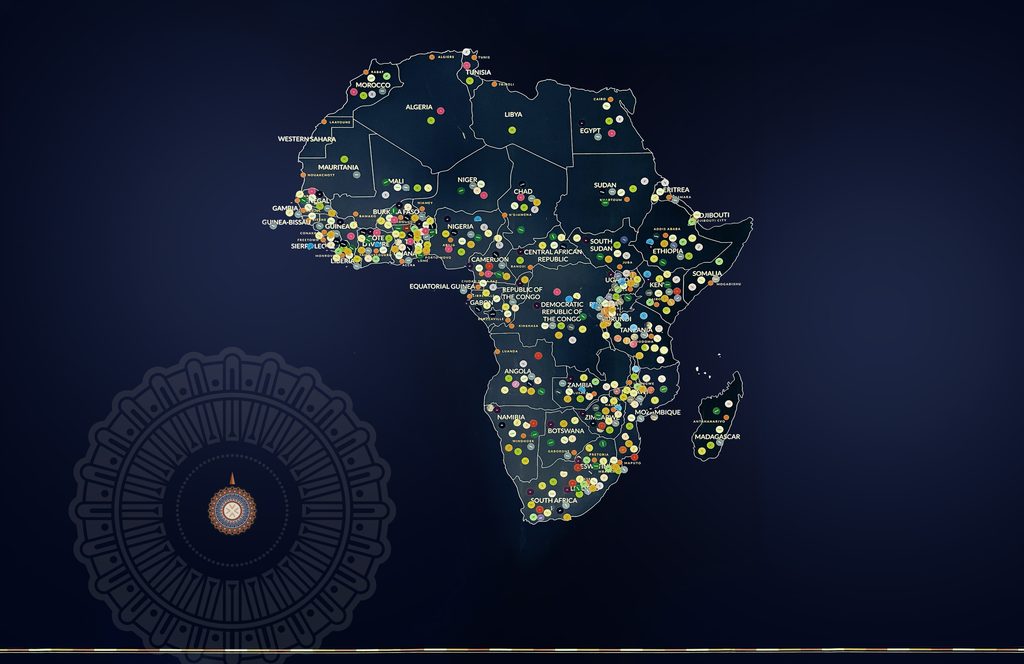
This was only a starting point. A fuller picture could help practitioners learn from one another, build on existing strengths and reach communities where training remains limited. For funders, it could provide a more informed basis for directing resources where they are most needed.
Connecting the ministry pathways
A clearer picture of the landscape also opens up opportunities for organisations to draw on their different strengths to support a more continuous journey of pastoral formation.
If transformation is a process rather than the outcome of a single programme, there is value in connecting the different stages of a leader’s development. A pastor might receive foundational biblical training through one ministry, for example, before moving into preaching, leadership or community development training through another. Each organisation contributes its expertise, while the pastor benefits from a sustained journey of learning and growth.
The same principle applies to organisations themselves. Many are navigating similar questions around developing trainers, mentoring leaders and assessing long-term change. Sharing resources, experience and lessons learned could strengthen existing approaches, reduce unnecessary duplication and build on the wisdom already present across the continent.
Shaping African-led solutions
Africa’s diverse cultures, communities and challenges call for approaches to pastoral formation that are developed and led by those who know these contexts best. There is already a wealth of experience and theological insight across the continent to draw on.
This creates an opportunity to move beyond adapting theological resources developed elsewhere towards creating biblically grounded training from within Africa itself. Investing in African trainers, thinkers and theologians can help develop approaches that engage with local realities, while bringing valuable African perspectives to the global church.
Local churches are central to this. As training organisations equip churches to disciple, develop and send their own leaders, they help strengthen the capacity of communities to carry this work forward.
The same applies to the next generation. Creating space for younger leaders to contribute, grow and take on meaningful responsibility is part of building a future in which pastoral formation is increasingly shaped, sustained and multiplied by African leaders themselves.
As funders, these conversations invite us to think deeply around our role in pastoral formation. Numbers and programmes offer useful measures of progress, but tell only part of the story. Changes in character, spiritual maturity and leadership often unfold over years, through relationships and experiences that are harder to measure.
Growing as partners in pastoral formation
There is an opportunity to look beyond individual programmes and consider how our investment can create the conditions for lasting transformation. This was the spirit of the Round Table itself: relationships before structures, with space to listen, learn and build trust.
This was the first RoundTable, and we trust more will follow as we continue learning together and exploring what it will take to see lasting transformation across Africa.
To explore more insights from September’s Round Table’s gathering, view here.
** The Future of World Religions: Population Growth Projections, 2010-2050](https://www.pewresearch.org/religion/2015/04/02/religious-projections-2010-2050/)
**Global Training Network, The Global Need for Pastoral Training https://gtn.org/